
Roasted boneless leg of lamb is a celebration dish, a centerpiece that promises succulent flavor and elegant presentation. It’s the cornerstone of festive meals, Sunday family gatherings, and special occasions, offering a taste of culinary tradition. However, achieving that perfect cook—crisp, herby exterior giving way to tender, juicy, pink-tinged meat—requires knowledge and technique.
This comprehensive guide will walk you through selecting, preparing, roasting, and serving lamb to perfection. We’ll cover essential tips, flavor pairings, and troubleshooting to ensure your roast is a triumph.
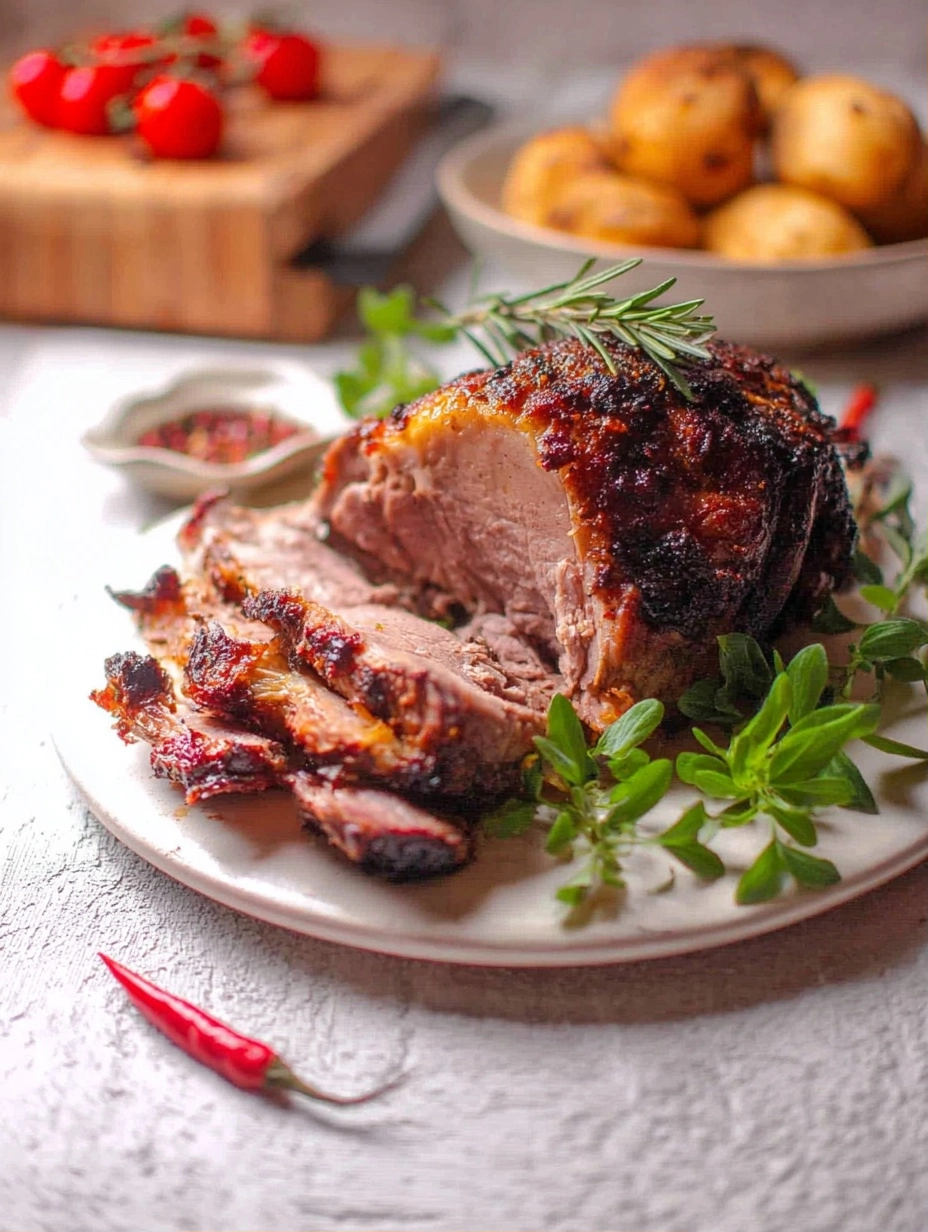
Why Choose Boneless Leg of Lamb?
A boneless leg of lamb offers distinct advantages for home cooks. First, it’s far easier to carve and serve. Removing the bone makes the meat uniform, allowing for even cooking throughout. Second, it provides more surface area for your herb and spice rub to adhere to, maximizing flavor infusion.
Finally, a boneless roast is simpler to tie, which helps it maintain a compact, cylindrical shape during cooking, preventing the thinner ends from overcooking while the thicker center reaches the desired doneness.
Selecting the Best Cut
When purchasing a boneless leg of lamb, look for meat that is bright red with fine marbling of creamy white fat. The fat should look firm and white, not yellow or gray.
Opt for a roast that is evenly shaped for consistent roasting. A 5-pound roast, as used in our recipe, is ideal for serving 10-12 people with some welcome leftovers.
Essential Ingredients and Safe Substitutions
The magic of this roast lies in its simple, aromatic rub. The core ingredients work in harmony to elevate the lamb’s natural richness.
- Boneless Leg of Lamb: The star. Ensure it’s at room temperature before roasting for even cooking.
- Salt & Black Pepper: Foundation of seasoning. Coarse sea salt is excellent for texture.
- Olive Oil: Creates a paste that helps the herbs stick and promotes browning.
- Fresh Garlic: Provides a pungent, savory depth that mellows beautifully when roasted.
- Fresh Thyme & Rosemary: Classic, earthy herbs that pair perfectly with lamb. If using dried, use half the amount.
- Lemon Zest: The secret ingredient! It adds a bright, citrusy note that cuts through the richness without adding acidity.
Critical Ingredient Sanitization
This recipe is designed with purity in mind. It contains no non-halal ingredients. The rub is composed solely of herbs, spices, oil, and citrus zest, ensuring a wholesome and permissible meal. Always verify the source of your meat to align with dietary requirements.
Step-by-Step Cooking Instructions
Preparation: The Key to Flavor
1. Make the Herb Rub: In a small bowl, combine 5 teaspoons of salt, 1 teaspoon of black pepper, 2 tablespoons of olive oil, 4 minced garlic cloves, 2 tablespoons each of chopped fresh thyme and rosemary, and 1 tablespoon of finely grated lemon zest. Mix into a fragrant paste.
2. Prepare the Lamb: Unfold the boneless leg on a clean surface. If your butcher hasn’t already, you may need to trim excess surface fat, leaving a thin layer to baste the meat. Pat the lamb completely dry with paper towels; this is crucial for browning.
3. Apply the Rub & Rest: Place the lamb in a roasting pan. Using your hands, massage the herb paste all over the entire surface of the meat, covering every part. For best flavor infusion, let the seasoned lamb rest, uncovered, in the refrigerator for at least 30 minutes, or up to overnight.
This resting period allows the salt to penetrate and season the meat deeply.
The Roasting Process
4. Preheat and Temper: Preheat your oven to 200°C (400°F). Remove the lamb from the refrigerator and let it sit at room temperature for about 15-20 minutes before roasting. This step prevents a cold center and promotes even cooking.
5. Roast to Perfection: Place the lamb in the preheated oven. Roast for approximately 80-85 minutes for medium-rare (an internal temperature of 125°F/52°C) or 90-95 minutes for medium (135°F/57°C). We highly recommend using a digital meat thermometer inserted into the thickest part for accuracy. Oven temperatures can vary.
6. Rest and Carve: Once the desired temperature is reached, transfer the lamb to a cutting board. Tent it loosely with aluminum foil and let it rest for a full 20 minutes. This is non-negotiable. Resting allows the juices, which have been driven to the center by heat, to redistribute throughout the meat, ensuring every slice is moist.
After resting, remove any netting or kitchen twine, slice against the grain, and serve.
Nutritional Profile
Lamb is an excellent source of high-quality protein, essential vitamins, and minerals like iron, zinc, and vitamin B12. The following nutrition table is based on a 5-pound roast serving 12 people.
| Nutrient | Amount Per Serving |
|---|---|
| Calories | 295 kcal |
| Total Fat | 14 g |
| Saturated Fat | 5 g (estimated) |
| Protein | 40 g |
| Carbohydrates | 1 g |
| Fiber | 0.3 g |
| Sugars | 0.03 g |
| Sodium | 1098 mg |
| Cholesterol | 125 mg (estimated) |
Pro Tips and Troubleshooting
Achieving the Perfect Crust
For an exceptionally crispy, flavorful exterior, ensure your oven is fully preheated and the lamb’s surface is dry before applying the rub. Some cooks start the roast at a higher temperature (220°C/425°F) for the first 15 minutes to sear the surface, then reduce to 200°C/400°F for the remainder of the cooking time.
Doneness Temperatures
- Rare: 120°F (49°C) – Very red, cool center.
- Medium-Rare: 125-130°F (52-54°C) – Warm red center; ideal for flavor and tenderness.
- Medium: 135-140°F (57-60°C) – Warm pink center.
- Medium-Well: 145-150°F (63-66°C) – Slight pink.
Remember, the temperature will rise 5-10°F during the resting period.
What If My Lamb is Over or Under-Cooked?
Undercooked: If, after resting, the lamb is too rare for your guests’ preference, simply return the sliced portions to a hot oven for a few minutes on a baking sheet.
Overcooked: Unfortunately, once lamb is overcooked and dry, it cannot be reversed. Serve it with generous amounts of sauce or gravy to add moisture.
Serving Suggestions and Pairings
Roasted boneless leg of lamb deserves complementary sides. Consider these classic pairings:
- Starches: Creamy mashed potatoes, roasted baby potatoes, buttery couscous, or crispy roast potatoes.
- Vegetables: Honey-glazed carrots, steamed green beans with almonds, minted peas, or a simple salad of bitter greens (like arugula) with a lemon vinaigrette to balance the fat.
- Sauces: A quick pan gravy made from the roasting juices, a fresh mint sauce, or a red wine reduction (using permissible alternatives like pomegranate juice or non-alcoholic wine).
Storing and Reheating Leftovers
Store cooled leftovers in an airtight container in the refrigerator for up to 4 days. For longer storage, wrap slices tightly and freeze for up to 3 months. Thaw in the refrigerator overnight.
To reheat, avoid the microwave, which can make the meat rubbery. Instead, place slices in a baking dish with a splash of broth or water, cover with foil, and warm in a 150°C (300°F) oven until heated through. Leftover lamb also makes incredible sandwiches, salads, or shepherd’s pie.
Conclusion
Roasting a boneless leg of lamb is a rewarding culinary project that yields impressive results. By focusing on quality ingredients, proper seasoning, accurate temperature control, and the critical resting period, you can produce a restaurant-quality roast at home. This dish, with its robust herbal crust and juicy interior, is more than just a meal; it’s an experience that brings people together.
Whether for a holiday feast or a dignified dinner party, this guide ensures your lamb will be the highlight of the table. Now, arm yourself with a meat thermometer, gather your fresh herbs, and prepare to create a masterpiece.
The Recipe
PrintRoasted Boneless Leg Of Lamb
A classic, herb-crusted roasted boneless leg of lamb, cooked to juicy perfection. This foolproof recipe delivers impressive flavor with a crisp exterior and tender, pink interior, making it the ideal centerpiece for any special occasion.
- Prep Time: 30 min
- Cook Time: 90 min
- Total Time: 2 hr
- Yield: 12 servings 1x
- Category: Main Course
- Method: Roasting
- Cuisine: Mediterranean
- Diet: Halal, High-Protein
Ingredients
5 pounds boneless leg of lamb (deboned)
5 teaspoons salt
1 teaspoon black pepper
2 tablespoons olive oil
4 cloves garlic (minced)
2 tablespoons fresh thyme
2 tablespoons fresh Rosemary
1 tablespoon lemon zest
Instructions
- Combine salt, black pepper, olive oil, garlic, thyme, rosemary, and lemon zest in a bowl.
- Place the lamb in a roasting pan and rub it with the prepared mixture. Let the lamb stand for 30 minutes in the fridge.
- Preheat the oven to 200C/400F. Bring the lamb to room temperature for 15 minutes.
- Roast the lamb for 80-85 minutes or 125F for medium rare, or 90-95 minutes or 135F for medium.
- Transfer the lamb to a cutting board and cover loosely with aluminum foil. Let it stand for 20 minutes. Remove the meat netting and slice before serving.
Notes
- For best results, use a digital meat thermometer to check doneness.
- Letting the meat come to room temperature before roasting ensures even cooking.
- The 20-minute rest after roasting is crucial for juicy slices.
- Leftovers make excellent sandwiches or can be used in salads.
Nutrition
- Serving Size: 1 serving (approx. 6oz cooked meat)
- Calories: 295 kcal
- Sugar: 0.03 g
- Sodium: 1098 mg
- Fat: 14 g
- Saturated Fat: 5 g
- Unsaturated Fat: 8 g
- Trans Fat: 0 g
- Carbohydrates: 1 g
- Fiber: 0.3 g
- Protein: 40 g
- Cholesterol: 125 mg